SFB 1381´s Female Minds

SFB 1381´s Female Minds

In our “SFB 1381´s Female Minds” series we introduce the female project leaders in our SFB by letting them answer three questions- about the SFB, their career, their balancing of work and private life, gender issues in general etc.

New features are coming in regularly- check here or follow our BlueSky/ LinkedIn accounts for updates!
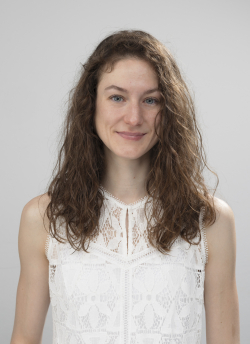
Asifa Akhtar began her research journey in London, UK, earning her BSc from the University College London and conducting her PhD at the Imperial Cancer Research Fund. She then moved to Germany for her postdoctoral work, staying at the EMBL in Heidelberg and the Adolf Butenandt Institute in Munich. Since 2009, Asifa has led the Laboratory of Chromatin Regulation at the MPI of Immunobiology and Epigenetics in Freiburg, where she was appointed director in 2013. In July 2020, she became the first international and female vice president of the Biology and Medicine Section of the Max Planck Society. In our SFB, Asifa serves as vice speaker and leads project B03.

Three questions to Asifa Akhtar

Ipek Akol completed her undergraduate studies in Biology at METU in Ankara before moving to Göttingen for her master’s degree. She carried out her doctoral research as a MeInBio fellow at the University of Freiburg at the Institute of Anatomy and Cell Biology, where she has continued as a postdoc since 2024. She received the Thomas Bayes Young Researcher Award, a Research Commission Grant from the Medical Faculty of the University of Freiburgas and was awarded with a fellowship of the Hans A. Krebs Medical Scientist Program (starting in 2026). Her research focuses on FOXG1, a transcription factor essential for early brain development. Ipek is one of our SFB 1381 Young Investigator Grantees (YIG03).

Three questions to Ipek Akol

Sonja-Verena Albers began her scientific career in Groningen before moving to Marburg and finally to Freiburg, where she became a W3 professor at the University in 2014. She currently serves as dean of the Faculty of Biology. Her research focuses on various aspects of Archaea, and she leads project A01 in our SFB while also being a member of the management board. She received an ERC Advanced Grant for her project “ARCHCELLORG – Organization of the Archaeal Cell”.

Three questions to Sonja Albers

Sukanya Guhathakurta studied Microbiology and Biotechnology in India, before she joined the Max Planck Institute for Immunobiology and Epigenetics in Freiburg for her doctoral studies. As postdoctoral fellow at the same institute she has been awarded with a Minerva Fast Track Fellowship to develop an independent project. Her work focuses on exploring the complex relationship between metabolic processes and epigenetic mechanisms that influence cell fate decisions.  Sukanya is one of our Young Investigator Grantees and heads project YIG04.

Three questions to Sukanya Guhathakurta

Annegret Wilde studied Microbiology in St. Petersburg, Russia before relocating to Berlin, where she pursued her PhD and stayed on for postdoctoral research, supported by a fellowship from “Hochschulsonderprogramm III” aimed at promoting women in science. Following a professorship in Giessen, she joined the University of Freiburg in 2012 as a W3 Professor of Molecular Genetics. Her research centers on cyanobacteria, with particular emphasis on cyanobacterial behavior, the role of RNA metabolism, and the circadian clock. Within our SFB, she leads Project A02.

Three questions to Annegret Wilde

Viviane Timmermann, a trained mathematician, expanded her expertise through research stays in the US and the UK before completing her PhD in Biomedical Mathematics at the University of Oslo. Following her postdoctoral fellowship in the US and an excursion into scientific administration, she has been leading a junior research group  at the University of Freiburg since 2024. She holds a Hans A. Krebs Digital Medical Scientist position as well as a Marie Curie Postdoctoral Fellowship. Viviane applies mathematical modeling to investigate biological processes, such as protein machinery dynamics. She joined our SFB in 2024 and is currently one of our Young Investigator Grantees (YIG 05).

Three questions to Viviane Timmermann

Laura Gámez-Díaz studied Microbiology in Colombia and completed her Master´s degree in Biology through a joint program between Colombia and Canada, before pursuing a PhD in Freiburg. Following her postdoctoral training in Freiburg and New York, Laura was appointed as Junior Group Leader at the CCI at the University Medical Center Freiburg. Her research focuses on the molecular mechanisms of immune dysregulation, particularly in LRBA deficiency. During the first funding period of our SFB 1381, Laura was awarded with the SFB 1381 Young Investigator Grant, and she is currently co-leading project B10.

Three questions to Laura Gámez-Díaz

Following research and study stays in Paris, Singapore, Berkeley, and various locations in Germany, Valérie Hilgers has led a research group at the Max Planck Institute of Immunobiology and Epigenetics in Freiburg since 2016. A recipient of both an ERC Starting Grant and an ERC Consolidator Grant, she will begin her new role as Professor of Anatomy and Cell Biology at the Department of Biomedicine at the University of Basel in July 2025. Valérie’s research focuses on the genetics and epigenetics of the nervous system, and within our SFB, she leads project B02.

Three questions to Valérie Hilgers

Claudine Kraft began her early research career in Vienna and Zürich, and in 2017, she became a W3 professor at the University of Freiburg. Her research centers on autophagy, the cellular waste disposal system. In our SFB, she leads project B10 and is also a member of the management board, in addition to co-heading the central project Z03. She is a founding member of “Women in Autophagy,” a network empowering women and other under-represented gender identities in the field of autophagy.

Three questions to Claudine Kraft